Setting your freelance rates isn’t about guessing or copying what others charge—it’s about building a pricing strategy that covers your costs, reflects your expertise, and aligns with the value you deliver. This guide walks you through proven pricing models, step-by-step calculations, and real-world tactics to price your services confidently in 2026.
Why Pricing Matters More Than You Think
The number one mistake freelancers make isn’t bad work—it’s bad pricing. Undercharging doesn’t just hurt your income; it signals low value to clients, attracts price-sensitive buyers, and makes it harder to raise rates later. On the flip side, pricing strategically helps you:
- Cover taxes, business expenses, and unpaid time (admin, marketing, learning)
- Build sustainable income that grows with your skills
- Attract clients who value outcomes over hourly bargains
Step 1: Calculate Your Minimum Hourly Rate
Before choosing a pricing model, know your floor—the lowest rate that keeps your business viable. Use this formula:
Minimum Hourly Rate = (Target Annual Income + Business Expenses + Taxes) ÷ Billable Hours Per Year
Break it down:
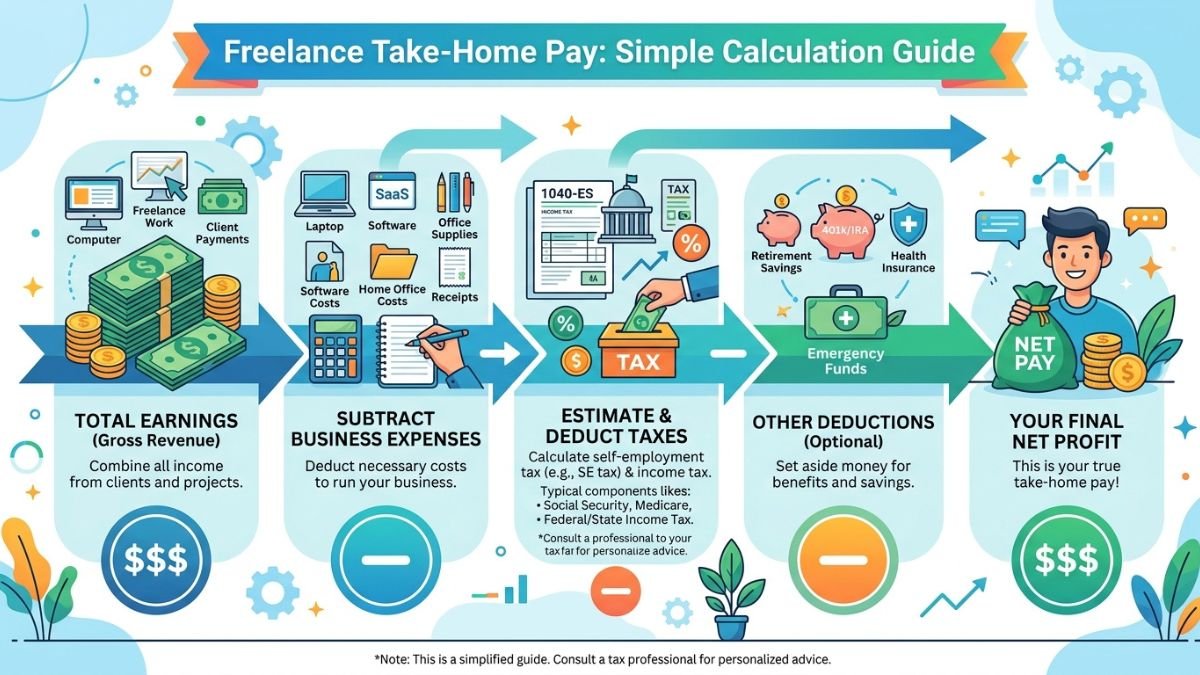
- Target annual income: What do you want to earn after taxes? (e.g., $70,000)
- Add business costs: Software, equipment, insurance, coworking, professional development—typically 10–20% of income
- Account for taxes: Self-employment taxes often run 25–35% depending on location
- Estimate billable hours: You won’t bill 40 hours/week. Factor in admin, marketing, sick days, and vacations. A realistic target is 25–30 billable hours/week × 48 weeks = 1,200–1,440 hours/year
Example calculation:
- Target income: $70,000
- Business expenses (15%): $10,500
- Taxes (30%): $21,000
- Total needed: $101,500
- Billable hours: 1,300
- Minimum rate: $101,500 ÷ 1,300 = $78/hour
This is your baseline. Charge less, and you’re subsidizing clients out of pocket.
Step 2: Choose the Right Pricing Model
Freelancers typically use four pricing models—each suited to different types of work and career stages. Many successful freelancers mix two or three depending on the project.
Hourly Pricing
What it is: Charge per hour worked.
Best for:
- Projects with unclear or evolving scope
- Discovery phases, consulting, or advisory work
- First-time clients where trust is still building
Pros:
- Simple to explain and track
- Client absorbs scope creep risk
Cons:
- Income capped by hours in a week
- Punishes efficiency (faster work = less pay)
- Clients may micromanage time logs
When to stop: Once you’ve done 10+ similar projects and can accurately estimate time, move to project or value-based pricing.
Project-Based (Flat Fee) Pricing
What it is: Charge a fixed price for a defined deliverable.
Best for:
- Well-scoped projects you’ve done before (websites, logos, blog packages)
- Creative or development sprints with clear milestones
How to set project prices:
- Estimate hours based on past similar projects
- Multiply by your target hourly rate
- Add 15–30% buffer for unknowns, revisions, and profit margin
Example: A 10-hour project at $80/hour = $800 + 20% buffer = $960 quoted price
Pros:
- Rewards efficiency (finish faster = higher effective hourly rate)
- Client knows total cost upfront
- Easier to scale income beyond hourly limits
Cons:
- You absorb scope creep risk if estimates are wrong
- Requires careful scoping and change-order processes
Pro tip: Break project fees into 3 payments—50% upfront, 25% at midpoint, 25% on delivery—to improve cash flow and reduce risk.
Retainer Pricing
What it is: Charge a recurring monthly fee for ongoing work or availability.
Best for:
- Maintenance, support, or recurring content needs
- Long-term client relationships with predictable workloads
How to structure:
- Define deliverables (e.g., 4 blog posts/month, 10 hours of support)
- Set a monthly fee that covers your time plus a premium for priority access
- Include clear limits and overage rates to prevent scope creep
Pros:
- Predictable, recurring revenue
- Deepens client relationships
- Reduces time spent chasing new projects
Cons:
- Can become a time trap if not scoped tightly
- Requires ongoing delivery capacity
Value-Based Pricing
What it is: Price based on the business outcome your work creates, not the time it takes.
Best for:
- Projects with measurable ROI (revenue growth, lead generation, cost savings)
- Strategic engagements where you’re solving high-stakes problems
- Clients who think in terms of return on investment
How to implement:
- Understand the client’s problem: What’s the current situation? What changes if you fix it?
- Estimate the value impact: Use concrete numbers (e.g., “this landing page will generate ~$50K in sales based on their traffic and conversion rate”)
- Price at a fraction of the value: Charge 5–25% of the annual impact, depending on risk and specialization
- Communicate the value clearly: Help the client see why the investment pays for itself
Example: If your email sequence will generate $100,000 in revenue, pricing at $15,000–$20,000 (15–20%) feels like a steal to the client while dramatically increasing your effective hourly rate.
Pros:
- Highest income ceiling
- Aligns your incentives with client success
- Positions you as a strategic partner, not a commodity
Cons:
- Requires deep discovery and ROI articulation
- Not suitable for all clients or project types
Step 3: Research Market Rates (But Don’t Anchor to Them)
Market research helps you gauge where you fit—but don’t let averages dictate your rates. According to 2025–2026 data:
- Global average freelance hourly rate: ~$101.50/hour (FreelancerMap 2025)
- Rates vary widely by industry, experience, and region
Use benchmarks to:
- Avoid severe underpricing relative to peers
- Identify premium niches where specialized skills command higher rates
But remember: your rate should reflect your costs, expertise, and the value you deliver—not just what others charge.
Step 4: Package and Present Your Pricing
How you present pricing matters as much as the numbers.
Use tiered proposals for value-based or project work
Offer 2–3 packages (e.g., Basic, Standard, Premium) with increasing scope and outcomes. This:
- Gives clients choice and control
- Anchors higher-value options as reasonable
- Makes it easier to upsell
Be transparent about what’s included
Clearly outline:
- Deliverables and timelines
- Number of revisions or rounds of feedback
- What triggers additional charges (scope changes, rush fees)
Require deposits
Always take 30–50% upfront before starting work. This:
- Filters out non-serious clients
- Improves cash flow
- Reduces risk of non-payment
Step 5: Raise Your Rates Strategically
Rate increases are inevitable if you want sustainable growth. Here’s how to do it without losing clients:
When to raise rates
- You’re consistently booked 2–3 months out
- You’ve completed 10+ similar projects and can estimate accurately
- You’ve added new skills, certifications, or niche expertise
- Inflation or increased business costs eat into margins
How to communicate increases
- For existing clients: Give 30–60 days notice, explain the value you’ve delivered, and offer a grandfathered rate for a limited time if appropriate
- For new clients: Simply quote your new rate—no explanation needed
- Tie increases to outcomes: “Based on the 40% increase in leads your last campaign generated, my rate for similar projects is now…”
How much to raise
- 10–20% annually is standard for growing freelancers
- Larger jumps (30–50%) make sense when shifting pricing models (e.g., hourly to value-based) or niching into premium markets
Common Freelance Pricing Mistakes to Avoid
Even experienced freelancers fall into these traps:
1. Pricing based on what others charge
Your costs, skills, and value are unique. Copying competitors leads to underpricing or mismatched positioning.
2. Not accounting for unpaid time
Admin, marketing, learning, and downtime are real business costs. If you only bill 60–70% of your working hours, your rate must reflect that.
3. Skipping the buffer
Always add 15–30% to project estimates for unknowns, revisions, and profit. Without it, you’re working at cost.
4. Charging hourly for high-value work
If your work directly drives revenue or savings, hourly pricing caps your income and undervalues your impact.
5. Not requiring deposits
Working without upfront payment increases the risk of non-payment and attracts clients who don’t value your time.
6. Fearing rate conversations
Clients respect confident, value-driven pricing. Hesitation signals uncertainty and invites negotiation downward.
Pricing Models at a Glance
| Model | Best For | Risk | Upside |
|---|---|---|---|
| Hourly | Unclear scope, discovery, advisory | Client absorbs scope creep; you absorb slow periods | Low—capped by hours in a week |
| Project (flat fee) | Defined deliverables you’ve done before | You absorb scope creep if estimates are wrong | Medium—efficiency gains are yours |
| Retainer | Ongoing, predictable work | You must maintain capacity | Medium-high—recurring revenue |
| Value-based | Measurable business outcomes (revenue, leads, savings) | Requires ROI articulation and trust | Highest—uncapped, aligned with client success |
Rule of thumb: Match the model to the work in front of you—hourly for unknowable scope, project for defined deliverables, retainer for repeating needs, value for measurable high-stakes outcomes. Expect to run two or three models at once.
Final Thoughts: Price for the Business You Want
Your pricing strategy shapes your entire freelance business—who you attract, how much you earn, and how sustainable your workload is. Start by calculating your minimum rate, choose models that fit your work type, and don’t be afraid to charge based on the value you create.
Remember: clients don’t buy hours—they buy outcomes. Price accordingly, communicate confidently, and adjust as you grow. Your future self (and your bank account) will thank you.